Sunday, 21 December 2025

Fennel sausage pappardelle

 
Shop-bought sausages make this an absolute doddle of a recipe and really delicious
Serves 4 | Ready in 30 mins

Ingredients

  • 400g | 14.1oz free-range pork and fennel sausages
  • 2 tbsp olive oil, plus extra for drizzling
  • 1 large fennel bulb, cut into wedges (reserve a few leaves to garnish)
  • 1 onion, diced
  • 2 tsp fennel seeds, bashed in a pestle and mortar
  • 2 garlic cloves, crushed
  • 1 tsp chilli flakes
  • 3 rosemary sprigs, finely chopped
  • 450g | 15.8oz fresh pappardelle or tagliatelle
  • 150ml | 5fl oz white wine
  • Zest of 1 lemon
  • 45g | 1.6oz Parmesan cheese, finely grated


Method

1Squeeze the meat from the sausages into a bowl.

2Heat the oil in a large, deep frying pan over a medium-high heat and fry the fennel wedges for a few minutes until coloured. Add the sausage meat and onion, stirring often, and cook for 10 mins, until the meat is browned. Add the fennel seeds, garlic, chilli and rosemary, and cook for 1 min. Cook the pappardelle according to the pack instructions.


3Add the wine to the meat mixture and allow to reduce for a few mins. Finely grate over the lemon zest and turn down the heat. Toss through the cooked, drained pasta.


4Divide between plates or bowls and finish with a grating of Parmesan, a drizzle of olive oil and the reserved fennel leaves.


Wine recommendations

2018 Montefalco Rosso, Antonelli, Umbria, Italy

£16.95 (Jeroboams | jeroboams.co.uk)

This is an organic Sangiovese with 15% Sagrantino matured in 2,500-litre barrels. Antonelli is family owned and run by Filippo Antonelli and is one of the most historic producers in Montefalco. Rich and characterful, it also offers plenty of freshness so matches well with pork and will stand up to the garlic and chilli in the dish.

2019 Canna Torta, IGT Toscana Bianco, Podere Le Ripi, Tuscany, Italy

£28.95 (Jeroboams | jeroboams.co.uk)

Made at the biodynamic Montalcino estate owned by Francesco Illy, this is a long skin contact (8 months), amphora-aged white made from Trebbiano. With more fruit than many orange wines and a savoury nature combined with apple skin notes and light tannins, it will offset the spices and fennel beautifully, whilst the richness and weight will work well with this rustic dish.

Friday, 19 December 2025

PEANUT CHILI OIL NOODLES


Video

 Ingredients:

  • -hand-cut thick noodles (or any noodles you like)
  • -peanut butter
  • -chili flakes (optional)
  • -cup fresh green onion, sliced
  • -sesame seeds
  • -garlic cloves, minced
  • -chili oil crisp
  • -rice vinegar
  • -dark soy sauce
  • -neutral oil (I use avocado)
  • -reserved pasta water (optional)
  • -More sliced green onion, for garnish

Instructions:

1. Boil your noodles in salted water and take them out about 30 seconds early so they can finish soaking up the sauce later. Save a bit of pasta water (!!) then rinse the noodles so they don’t fuse together like overexcited besties at a reunion.
2. In a cold pan, toss in peanut butter, chili flakes, green onion, sesame seeds, garlic, one tablespoon of chili crisp, rice vinegar, and dark soy sauce. No heat yet… we’re building flavor first.
3. Heat one third cup of neutral oil until it’s dangerously hot… like “step back and pray for your eyebrows” hot. Carefully pour it over the cold ingredients and listen to that ASMR sizzle. Give it all a good stir.
4. Add your noodles and toss until they’re completely coated and glossy. If you want that restaurant-level silkiness, turn the heat to medium low and mix in a splash of your saved noodle water.
5. Kill the heat, hit it with extra green onion, a spoon of chili crisp, and a squeeze of lime if you’re in your main character era.

Wednesday, 17 December 2025

Chicken Francese


Article

Active Time:50 mins

Total Time:1 hr 10 mins

Yield:4 servings

Ingredients

  • 4 (6-ounce) boneless, skinless chicken breasts
  • 1 teaspoon kosher salt
  • 1/2 teaspoon freshly ground black pepper
  • 2 large eggs
  • 2 tablespoons grated Parmigiano-Reggiano cheese
  • 1 cup (about 4 1/4 ounces) all-purpose flour
  • Vegetable oil, for frying
  • 3 tablespoons unsalted butter, divided
  • 2 teaspoons minced garlic cloves
  • 1 cup dry white wine
  • 4 cups (1 quart) lower-sodium chicken broth
  • 1 1/3 cups heavy whipping cream
  • 1 Meyer lemon or regular lemon, cut into 8 thin rounds, seeds removed
  • 1/4 cup chopped flat-leaf parsley, plus more for garnish

Directions

  1. Working with one chicken breast at a time, place in a large plastic freezer bag and gently pound to 1/2-inch thickness using the flat side of a meat mallet or a heavy pan. Season flattened chicken breasts all over with salt and pepper and set aside.
  2. Whisk together eggs and grated cheese in a shallow bowl. Place flour in another shallow bowl.
  3. Pour oil to a depth of 1/8-inch in a deep large skillet and heat over medium; set up a large plate lined with paper towels. Working with two chicken pieces at a time, lightly dredge chicken in flour and shake off excess. Dip in egg mixture, letting excess drip off. Place in hot oil and fry until golden brown and just cooked through, about 4 minutes per side. Transfer to paper-towel-lined plate and repeat with remaining two chicken pieces.
  4. Carefully discard hot oil and wipe skillet clean. Melt 2 tablespoons of the butter in skillet over medium. Add garlic and cook, stirring constantly, until fragrant, about 30 seconds. Stir in wine and bring to a simmer over high. Simmer until reduced by half, about 5 minutes. Stir in chicken broth and return to a vigorous simmer over high. Simmer until reduced by half, about 10 minutes. Stir in cream and bring to boil over high. Reduce heat to medium-high and simmer, stirring occasionally, until sauce is thick enough to coat the back of a spoon, about 10 minutes.
  5. While cream sauce simmers, melt remaining 1 tablespoon butter in a medium skillet over medium. Arrange lemon slices in a single layer on bottom of skillet. Cook, undisturbed, until slices are caramelized around edges, 5 to 8 minutes. Remove from heat and set aside.
  6. Stir parsley into cream sauce and reduce heat to medium-low. Add chicken and gently simmer until chicken pieces are heated through, about 2 minutes. Divide chicken among four plates; spoon cream sauce evenly over chicken. Top with caramelized lemon slices and sprinkle with parsley.

Tuesday, 16 December 2025

Italian Potato Stir Fry Makes Everyone Obsessed! Easy One-Pan Dinner


This is one of our favorite family dishes — simple, cozy, and full of Italian vibes. Everything comes together in just one pan: golden potatoes, juicy and hearty minced meat in tender creamy garlic sauce, perfectly cooked with rich flavor, making it the perfect idea for a hearty dinner the whole family will enjoy.


Ingredients:

  • 600–700 g potatoes
  • 400–500 g minced beef or chicken
  • 1 tbsp butter
  • 1 medium onion, finely chopped
  • 4 garlic cloves, chopped
  • 1 tsp Italian herbs (dried)
  • 100 ml beef or chicken broth
  • 150 ml cream (30–33%)
  • 50 g Parmesan or other hard cheese (optional)
  • A handful of fresh parsley

📝 Preparation:
1. 00:00 Cut the potatoes into wedges and fry them covered over medium heat. Then transfer them to a separate bowl.
2. 00:40 Brown the minced meat as directed, add onions and spices, and return the potatoes.
3. 01:46 Add broth or water and cream.
4. 02:20 Serve warm and enjoy!

Creamy Bolognese Lasagna Rolls (Rosettes)


Article

  • Prep - 60 mins
  • Cook - 3 hrs
  • Refrigeration Time: 60 mins
  • Total - 5 hrs
  • Serves - 6 to 8 servings
  • Makes - 18 lasagne wheels

Ingredients

For the Bolognese:

  • One 1/4-ounce (7g) packet unflavored gelatin (about 1 1/2 teaspoons)
  • 1 cup (240ml) homemade or store-bought low-sodium chicken stock
  • 1 tablespoon (15g) unsalted butter
  • 1 large carrot (about 6 ounces; 188g), peeled and finely minced (see notes)
  • 1 to 2 celery ribs (about 4 ounces; 120g); finely minced (see notes)
  • 1 medium yellow onion (about 8 ounces; 240g), finely minced (see notes)
  • 2 pounds (900g) ground meat, either all beef or 1 pound beef with 1/2 pound each ground pork and veal, divided (see notes)
  • 2 tablespoons (30ml) tomato paste
  • 1 cup (240ml) dry red wine
  • 1 bay leaf
  • Pinch freshly grated nutmeg
  • 1 teaspoon fish sauce (optional)
  • Kosher salt
  • 1/4 cup (60ml) heavy cream

For the Besciamella:

  • 6 tablespoons unsalted butter (3 ounces; 84g)
  • 6 tablespoons (48g) all-purpose flour
  • 4 cups (960ml) whole milk
  • Kosher salt and freshly ground black pepper
  • Pinch freshly grated nutmeg (optional)

For the Tomato Sauce:

  • 2 tablespoons (30ml) extra-virgin olive oil
  • 1 medium clove garlic, lightly smashed
  • 1 large sprig fresh basil
  • One 28-ounce (794g) can whole peeled tomatoes in their juices, blended, or one 24-ounce (700g) bottle tomato passata
  • Kosher salt

For the Assembly:

  1. 2 pounds (900g) store-bought fresh lasagna noodles or fresh homemade (follow the recipe and instructions here through step 10, doubling the quantity to yield 2 pounds total), cut into 6- by 12-inch-long rectangles
  2. Vegetable oil, for greasing pan and pasta
  3. 8 ounces (226g) fresh mozzarella, cut into 1/4-inch pieces
  4. 1 cup finely grated Parmigiano-Reggiano (4 ounces; 113g), divided

Directions

  1. For the Bolognese: In a 1-cup liquid measuring cup, sprinkle stock with gelatin; set aside.

    Overhead view of gelatin mixture

    Serious Eats / Amanda Suarez

  2. In a large Dutch oven, melt butter over medium-high heat until foaming. Add carrots, celery, and onions and cook, stirring, until translucent, about 6 minutes. Add half the ground meat and cook, stirring occasionally and breaking up any large pieces as you go, until well browned, about 12 minutes. Add remaining meat and continue to cook until all meat is cooked through and broken into very small pieces, about 10 minutes.

    Two image collage of cooking aromatics and adding meat

    Serious Eats / Amanda Suarez

  3. Add tomato paste and cook, stirring, for 2 minutes. Stir in wine, scraping bottom of pot, and bring to a boil, then cook until raw alcohol smell has cooked off, about 5 minutes. Add bay leaf along with the reserved stock and bring to a simmer; lower heat to maintain a very gentle simmer. Stir in nutmeg and fish sauce (if using) and season with salt. Continue to simmer, stirring occasionally, until sauce is thickened and has almost no excess liquid remaining, about 2 hours.

    Four image collage of adding tomato paste, stock and wine

    Serious Eats / Amanda Suarez

  4. Skim and discard any fat from surface along with bay leaf. Stir in cream and season with salt. Set aside while pasta and besciamella are prepared.

    Overhead view of filling

    Serious Eats / Amanda Suarez

  5. Meanwhile, for the Besciamella: In a small saucepan, melt butter over medium-high heat. Add flour and whisk to form a paste. Continue to cook, stirring, until raw flour scent is gone, about 1 minute. Whisking constantly, add milk in a thin, steady stream until fully combined. Sauce will initially become very thick, then get very thin once all the milk is added.

    Two image collage of whisking butter flour and milk

    Serious Eats / Amanda Suarez

  6. Heat, stirring constantly, until sauce comes to a simmer and begins to thicken slightly. Reduce heat to low and cook until sauce is just thick enough to coat the back of a spoon, about 3 minutes. Season with salt and pepper. Whisk in nutmeg. If any lumps form, simply whisk thoroughly or use a hand blender. Add  1/2 cup of the besciamella to the reserved bolognese. Press a piece of plastic wrap over surface of the remaining sauce to prevent a skin from forming and keep warm until ready to use.

    Two image collage of sauce saucing back of spoon and wrapped in plastic wrap

    Serious Eats / Amanda Suarez

  7. To Assemble: Prepare an ice bath. In a pot of salted boiling water and working in batches, cook pasta until just shy of al dente, about 1 minute for fresh pasta. Using a spider or mesh strainer, transfer immediately to ice bath to cool.

    Drain pasta well, then brush each sheet, one at a time, lightly on both sides with vegetable oil to prevent sticking. Lay them out on a parchment-lined baking sheet, with layers of plastic wrap between the layers of pasta to prevent sticking.

    Overhead view of lasagna cooking and brushing with oil

    Serious Eats / Amanda Suarez

  8. To Make the Rosette: On clean work surface lay one pasta sheet with a short side facing you. Spread 1/4 cup of the besciamella in a thin layer evenly on top of pasta sheet, then sprinkle with grated Parmigiano and pieces of mozzarella. Place a second sheet of pasta on top. Spread about 3/4 cup of the bolognese on top, leaving a 1-inch border at the top short edge farthest from you. Smear about a teaspoon of the besciamella on the border, Starting at the bottom, roll up the layered pasta like a jelly roll. Transfer to a sheet pan seam-side down.

    Four image collage of assembling rolls

    Serious Eats / Amanda Suarez

  9. Repeat the process with the remaining pasta sheets, cheese, and sauces to make a total of 6 rolls. Refrigerate the rolls until chilled, at least 1 hour or up to 12 hours.

    Overhead view of rolls

    Serious Eats / Amanda Suarez

  10. To Make the Tomato Sauce: In a small saucepan, heat olive oil with garlic clove over medium heat until garlic begins to sizzle. Reduce heat to medium low and continue to cook until garlic is just beginning to turn golden, about 4 minutes. Remove garlic clove and discard. Add blended canned tomatoes (or passata) along with the basil and bring to a simmer over medium-high heat. Reduce heat to maintain a gentle simmer and cook, stirring often, until thickened and no longer watery (this may take almost no time at all for some passata products, or up to 20 minutes for waterier canned tomatoes). Remove from heat and season with salt. Set aside.

  11. To Assemble and Bake: Adjust oven rack to middle position and preheat oven to 375°F (190°C). Grease a 3-quart oval or 9- by 13-inch baking dish with oil. Gently slice each roll in thirds crosswise to make 18 pinwheels.

    Overhead view of cutting into rolls

    Serious Eats / Amanda Suarez

  12. Spoon a thin, even layer of passata on the bottom of baking dish. Arrange lasagne rolls cut side up, then sprinkle a generous amount of cheese on top. Bake, rotating baking sheet halfway through, until golden brown, 35 to 40 minutes.

    Overhead of rolls arranged in dish

    Serious Eats / Amanda Suarez

  13. Add remaining besciamella to a piping bag and pipe small dots in a decorative pattern; alternatively, dollop warmed besciamella on top with a spoon. Sprinkle with more cheese and serve.

    Overhead view of finished Rosette al Forno

    Serious Eats / Amanda Suarez

Notes

You can mince the vegetables by hand, but for speed and ease, a food processor will make quick work of the aromatic vegetables.

You can make this recipe with ground beef alone, but for even better flavor and texture, a mixture of beef, pork, and veal will deliver best results.

Make Ahead and Storage

The bolognese can be refrigerated in an airtight container for up to 5 days or frozen for up to 3 months.

Special Equipment

Dutch oven, 3-quart oval casserole dish or 9- by 13-inch baking dish, half sheet tray, pastry bag (optional), food processor (optional)

On-Pot Chicken Pomodoro Skillet


Article

Ingredients

  • 4 chicken breasts boneless, skinless
  • 1¼ tsp salt divided
  • ¾ tsp freshly ground black pepper divided
  • 1-3 tbsp olive oil
  • 4 cloves garlic minced
  • ¼ cup water
  • 1 can (796 mL) San Marzano tomatoes
  • ½ tsp granulated sugar
  • ¼ tsp dried basil
  • ¼ tsp dried oregano
  • 2 Roma tomatoes diced
  • 8-10 basil leaves thinly sliced, for garnish

  1. Place one chicken breast on cutting board. Holding knife blade parallel to board and starting at thickest long side, slice horizontally to make two thin cutlets. Repeat with remaining chicken.
  2. Sandwich chicken between plastic wrap; using meat mallet or heavy-bottomed saucepan, pound to ½ in (1 cm) thickness. Sprinkle with 1 tsp of the salt and ½ tsp of the pepper.
  3. In large skillet, heat oil over medium-high heat; working in batches, cook chicken, flipping once, until browned, 2 to 3 minutes per side. (Chicken does not need to be cooked through.) Remove to a plate. Reduce heat to medium.
  4. Add garlic to pan and cook until fragrant, about 1 minute. Stir in water, scraping up any browned bits.
  5. Add canned tomatoes with juices, breaking up tomatoes with your hands as you add them. Stir in sugar, basil and oregano. Return chicken to pan, flipping to coat with sauce.
  6. Cover and cook over medium heat until chicken is cooked through, 11 to 14 minutes. Remove chicken from sauce and let rest for 5 minutes.
  7. While chicken is resting, stir in Roma tomatoes and cook until heated through, about 3 minutes. Sprinkle with remaining ¼ tsp each salt and pepper or to taste. Serve the sauce over the chicken and sprinkle with fresh basil. (See note #2.)

Notes

Nilsson recommends using San Marzano tomatoes—they’re less acidic than other varieties as well as being both sweet and vibrant. If you don’t have San Marzano tomatoes, use canned whole tomatoes, and add a small pinch of sugar if you find the sauce tart.

Serve the sauce over pasta or polenta or with roasted zucchini.

Saturday, 13 December 2025

Crispy Potato Salad with Creamy Chili Crunch Dressing


INGREDIENTS

  • 4–4½ lbs golden potatoes, cut into wedges
  • ½ teaspoon baking soda
  • Momofuku Savory Seasoned Salt
  • ½ cup olive oil
  • 1 cup mayonnaise (preferably Kewpie)
  • 2 tablespoons whole grain or dijon mustard
  • 1 tablespoon Momofuku Rice Vinegar
  • 1 cup bread and butter pickles, chopped, or sweet pickle relish
  • 1 tablespoon Momofuku Chili Crunch
  • 1 shallot, sliced
  • ½ cup parsley or dill, chopped
  • 3–4 scallions, sliced

Directions

  1. Heat oven to 425°F.
  2. Place potatoes in a large pot of water with ½ teaspoon of baking soda and 1 tablespoon of Momofuku Savory Seasoned Salt. Bring to a boil and cook for 10-12 until potatoes are very tender. Remove from heat and fully drain.
  3. Return potatoes to pot and toss with olive oil. Using a wooden spoon or spatula, stir the potatoes, until a mashed potato–like paste has collected around each potato. (This will crisp up in baking.) Spread the potatoes on 2 sheet pans, making sure not to crowd them, then roast for 30 minutes.
  4. Remove pans from oven, gently toss the potatoes, then return to the oven for another 15-20 minutes until they are deeply browned and crisped. Remove from the oven and rest until you are ready to serve.
  5. Meanwhile, mix the dressing. Combine 1 cup mayonnaise, 2 tablespoons of mustard, 1 tablespoon of rice vinegar, 1 cup of chopped pickles, 1 tablespoon of Momofuku Chili Crunch, and a generous pinch of Momofuku Savory Seasoned Salt. 
  6. When you are ready to serve, toss cooked potatoes (they can still be warm) with the dressing. Top with sliced shallots, herbs, and scallions. Season with Momofuku Savory Seasoned Salt to taste and serve immediately. 

Sunday, 7 December 2025

Stanley Tucci Pasta E Fagioli Soup


Article

  • Prep Time: 5 minutes
  • Cook Time: 30 minutes
  • Total Time: 35 minutes
  • Servings: 8

Ingredients:

  • 2 tablespoon extra-virgin olive oil
  • 1 medium onion, diced 
  • 2 cloves garlic, chopped 
  • 2 (15 1/2-ounce) cans cannellini beans, drained, and rinsed 
  • 3 cups low-sodium chicken broth or vegetable broth 
  • 2 1/2 cups (about one 24-ounce jar) marinara sauce 
  • 1 Parmesan rind plus 1/2 cup grated Parmesan for serving
  • 6 cups stemmed, chopped Tuscan kale
  • 1 pound small pasta, such as ditalini
  • 1 tablespoon red wine vinegar
  • salt and black pepper, to taste
  • crushed red pepper, to taste

Instructions:

  1. Heat oil in a large pot set over medium-low heat. Add onion and garlic and cook, stirring often, until onion and garlic are softened, about 8 minutes.
  2. Add beans, broth, marinara, and Parmesan rind. Increase heat to a simmer and cook, stirring often, for 15 minutes.
  3. Meanwhile, bring 2 quarts of water to a boil in a large pot. Season with 2 teaspoons salt. Add kale and cook until tender, about 3 minutes. Use tongs to transfer kale to the soup, reserving blanching water. Return water to a boil, add pasta, and cook following package directions. Drain pasta and portion among serving bowls.
  4. Stir vinegar into the soup and season to taste with salt and pepper then ladle over pasta. Garnish with grated Parmesan and crushed red pepper, if using.

Wednesday, 3 December 2025

One-Pan Italian Sausage and Orzo Pasta


Link

Yield: 4 as a main dish Prep Time: 20 minutes Cook Time: 25 minutes Total Time: 45 minutes

Ingredients

  • 2 tbsp olive oil
  • 2 large Italian sausages (hot or mild)
  • 1 medium onion (white or yellow), chopped
  • 1 large bell pepper, chopped
  • 3 garlic cloves, minced
  • 2 tsp Italian seasoning
  • 1 tbsp balsamic vinegar
  • 1½ cups chicken broth (low/no sodium)
  • 1 cup marinara sauce
  • 1 cup uncooked dry orzo pasta
  • 2 cups baby spinach
  • Salt and pepper to taste

Topping: Melty shredded cheese of your choice like parmesan, cheddar, and/or mozzarella.

Instructions

  1. In a large non-stick sauté pan or skillet (I use a 12-inch skillet) at medium-high heat, pour in 1 tablespoons of olive oil and cook the sausages (brown each side) until they are fully cooked through (*see first note). Turn off heat.
  2. Remove the sausages from the pan onto a cutting board and let cool slightly before slicing them into pieces. Set aside.
  3. Set the heat to medium-high. In the same pan, add in another tablespoon of olive oil along with the onions, peppers, salt, and pepper. Sauté until the onions start to soften and brown. 
  4. Add the garlic and Italian seasoning and stir for another minute. Pour in the balsamic vinegar and stir to combine.
  5. Add in the sliced sausages, chicken broth, marinara sauce, and orzo. Carefully stir the ingredients together until well-incorporated.
  6. Bring the ingredients to a boil before reducing to a simmer. Cook uncovered for 12-15 minutes, stirring occasionally, until the orzo is al-dente (**see second note).
  7. Mix in the spinach until wilted. Taste for additional salt and pepper or other seasonings if necessary. Top with shredded cheese of your choice. Enjoy!


Other option - https://www.instagram.com/reel/DRpu1bljq5T/?igsh=MWcwaXczd2Mzb3BkeA==


Notes

*Use a splatter screen or lid to help prevent oil from splattering. If you find that the sausages are browning, but not cooked through, add ¼ cup of water or broth to the skillet and cover with a lid, letting the liquid evaporate fully, to completely cook the sausages.

**If the liquid is evaporating too quickly and the orzo is not yet cooked, check to see if the heat is too high and add more broth, sauce, or water in ¼ cup increments, to allow the pasta to cook to al dente.

Nutritional information is based on one serving for a total of four servings.


Nutrition Information: Yield: 4 Serving Size: 1

Amount Per Serving: Calories: 551Total Fat: 26gSaturated Fat: 9gTrans Fat: 0gUnsaturated Fat: 17gCholesterol: 45mgSodium: 1165mgCarbohydrates: 57gFiber: 4gSugar: 9gProtein: 22g

Nutritional values are estimated based on the ingredients used by the author; your ingredients may differ. These values are calculated using Nutritionix.

Tuesday, 2 December 2025

Frico friulano


Frico friulano

Where patience, precision, and melted cheese meet in a crispy edge

Dec 01, 2025

Everyone asked for this one and I actually thought it would be simple. They said is just cheese, potatoes, onions, what could go wrong? Then I tried it, and frico reminded me that simple isn’t the same as easy. It taught me that even humble food demands attention.

Frico belongs to Friuli like fire belongs to a hearth. It started in the mountain villages, born from thrift and cold evenings, where families cooked close to the flame. At first it was just scraps of Montasio (the cheese made by monks in alpine dairies) melted in a pan until crisp. Later came onions and potatoes, softening the edges, turning a bite of cheese into a full meal. What began as a way to stretch food became something almost ceremonial, eaten hot from the pan, passed around without plates.

Learning to make it felt like learning someone else’s language, for real. There are two dialects: morbido, soft and melting inside, and croccante, crisp and thin like a sheet of gold. I worked through both until I understood the rule that matters the most that is control. Parboil the potatoes just enough, stir slowly, and trust the heat. When the cheese begins to pull away from the pan, you know it’s ready to rest, to brown and to swirl around. One flip and the smell of Montasio fills the kitchen, there you know you are getting it right.

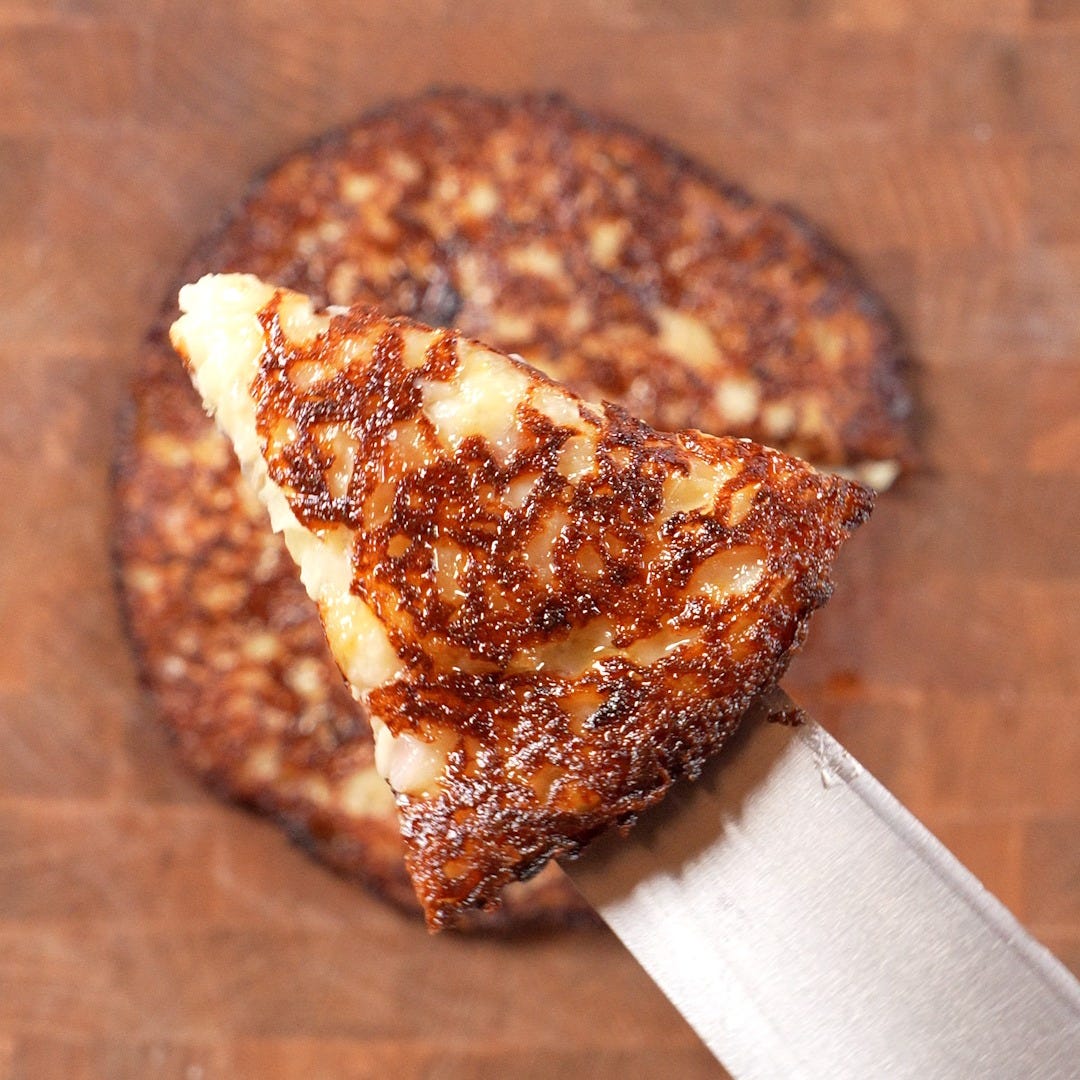
The first slice always silences the table: molten center and golden crust together with the sound of the knife scraping the cuttingboard. Frico never traveled far from home maybe because it couldn’t. Its secret lives in the land and in the patience it asks for. Cooking it now feels like tending a small fire: slow, free and deeply human. In the end, what stays with you isn’t just the taste, but the quiet pride of turning a few ingredients into something that feels whole.

Forgotten Italian Classics exists because of readers like you. If you’d like to support my work and get every recipe in full, consider joining as a free or paid subscriber. Together, we’ll keep these Italian classics alive, one dish at a time.

Serves: 4
Time: 45 minutes
Difficulty: Medium
Region: Friuli-Venezia Giulia
Season: Autumn–Winter

INGREDIENT

600 g potatoes
1 large onion (about 200 g)
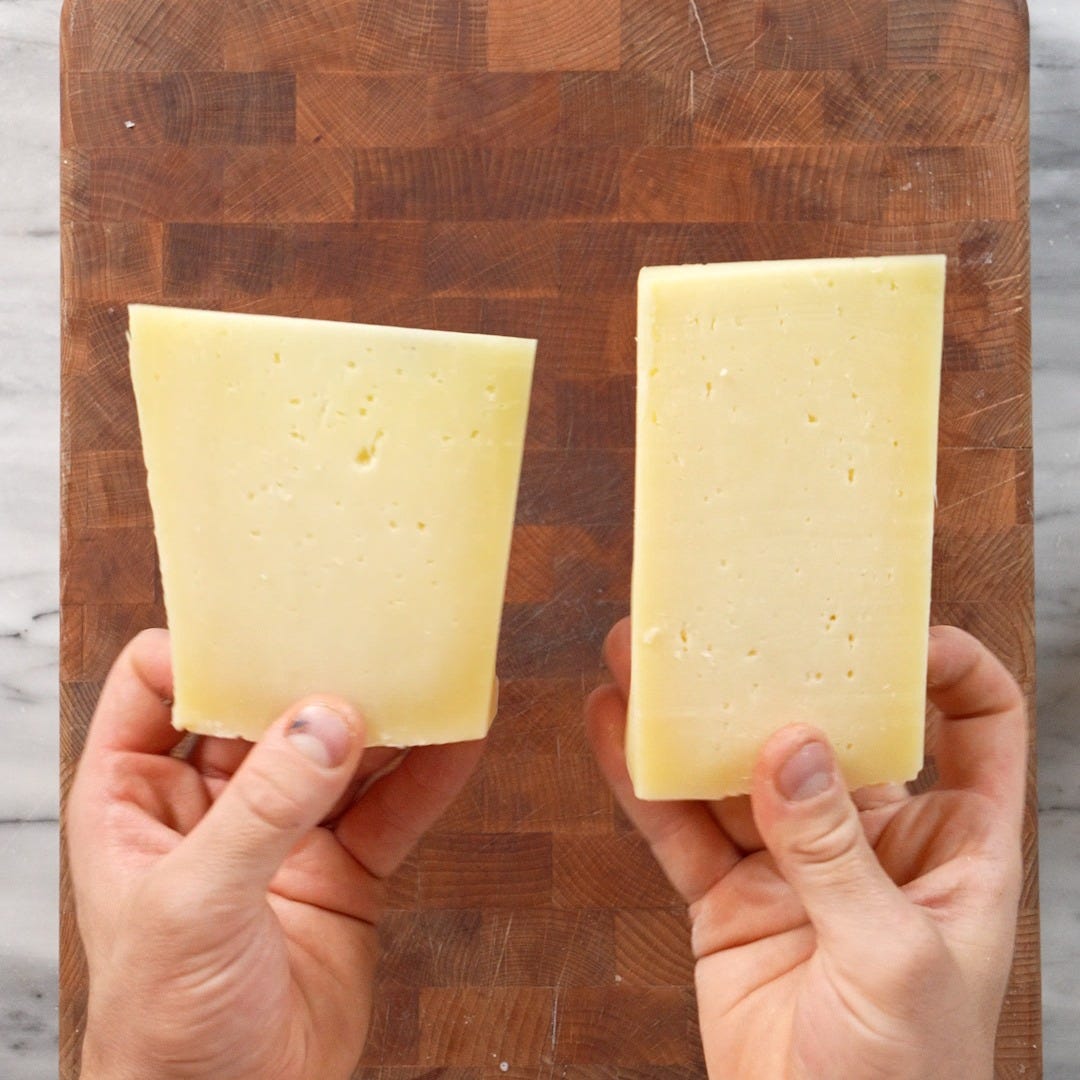
250 g young Montasio cheese, grated or cubed
150 g semi-aged Montasio cheese, grated or cubed
40 g olive oil (or lard for a traditional touch)
Salt and black pepper, to taste

METHOD

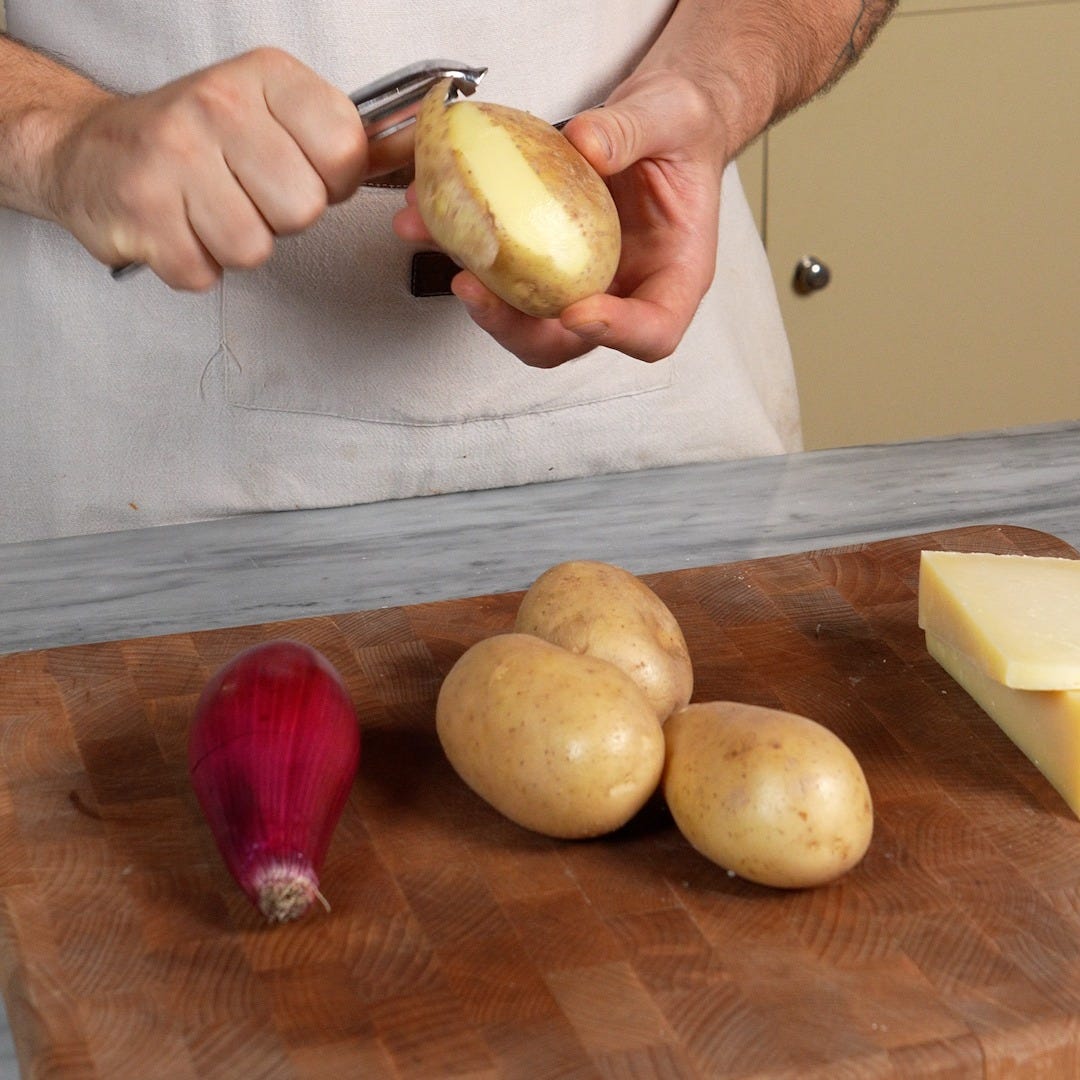
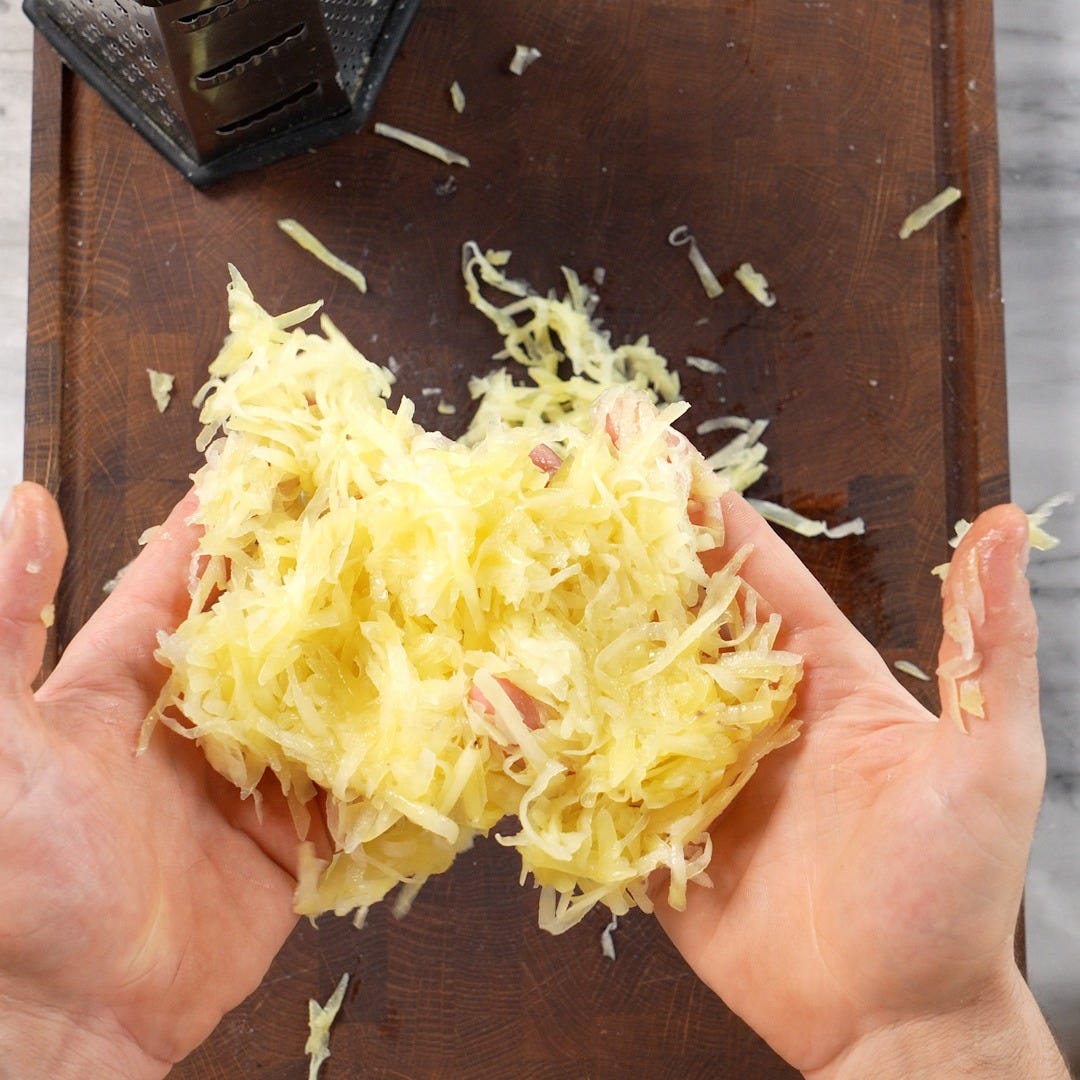
Peel the potatoes and briefly parboil them in 10% salted water for 3–4 minutes, then drain well and let them steam-dry to remove excess moisture. Grate them coarsely and slice the onion thinly.

In a nonstick pan (IMPORTANT), pour the olive oil over medium heat. Add the onion with a pinch of salt. Cook slowly for 5 minutes until soft and golden. Add the potatoes and stirring occasionally for 10 minutes. The mix should start to hold together, that’s the starch doing its work.

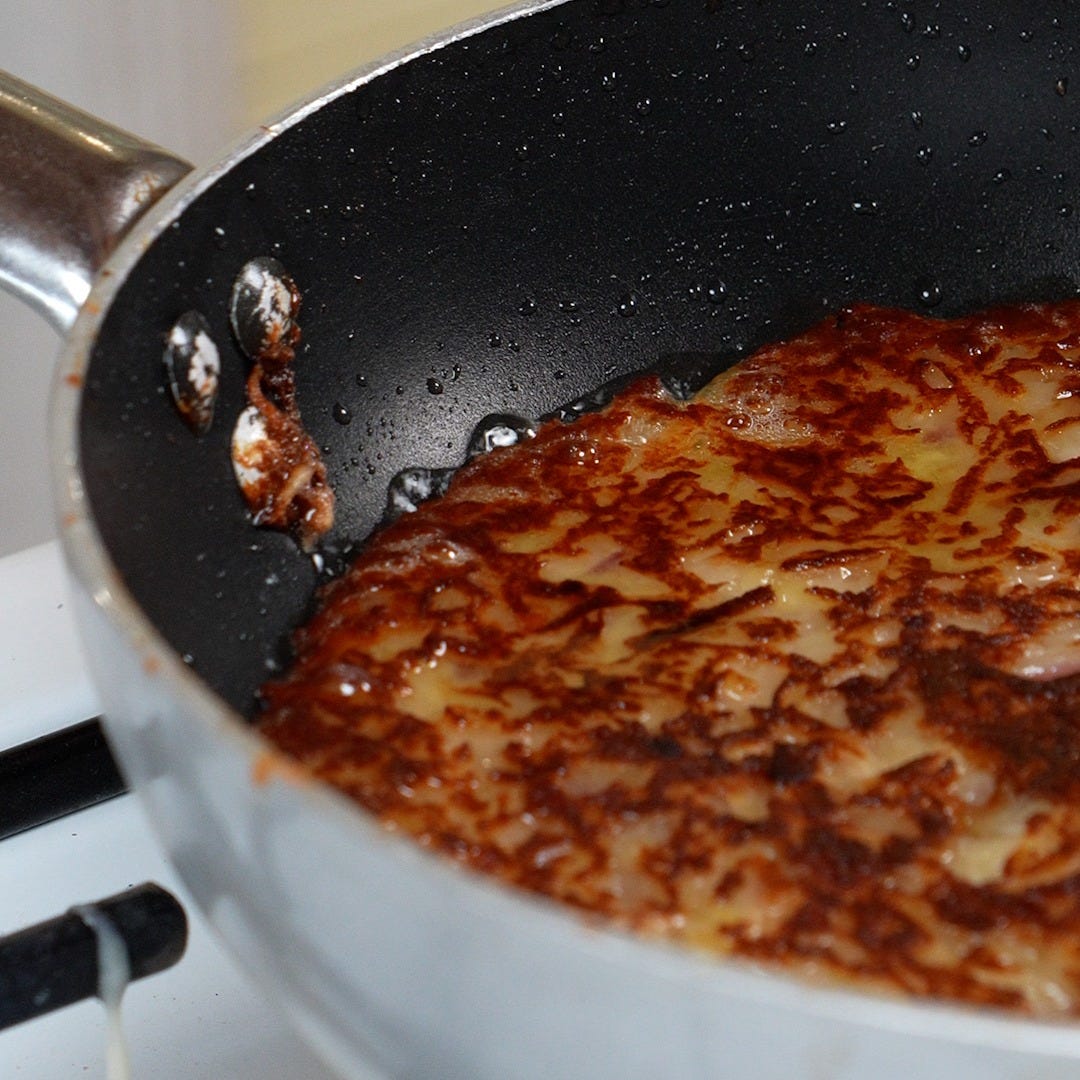
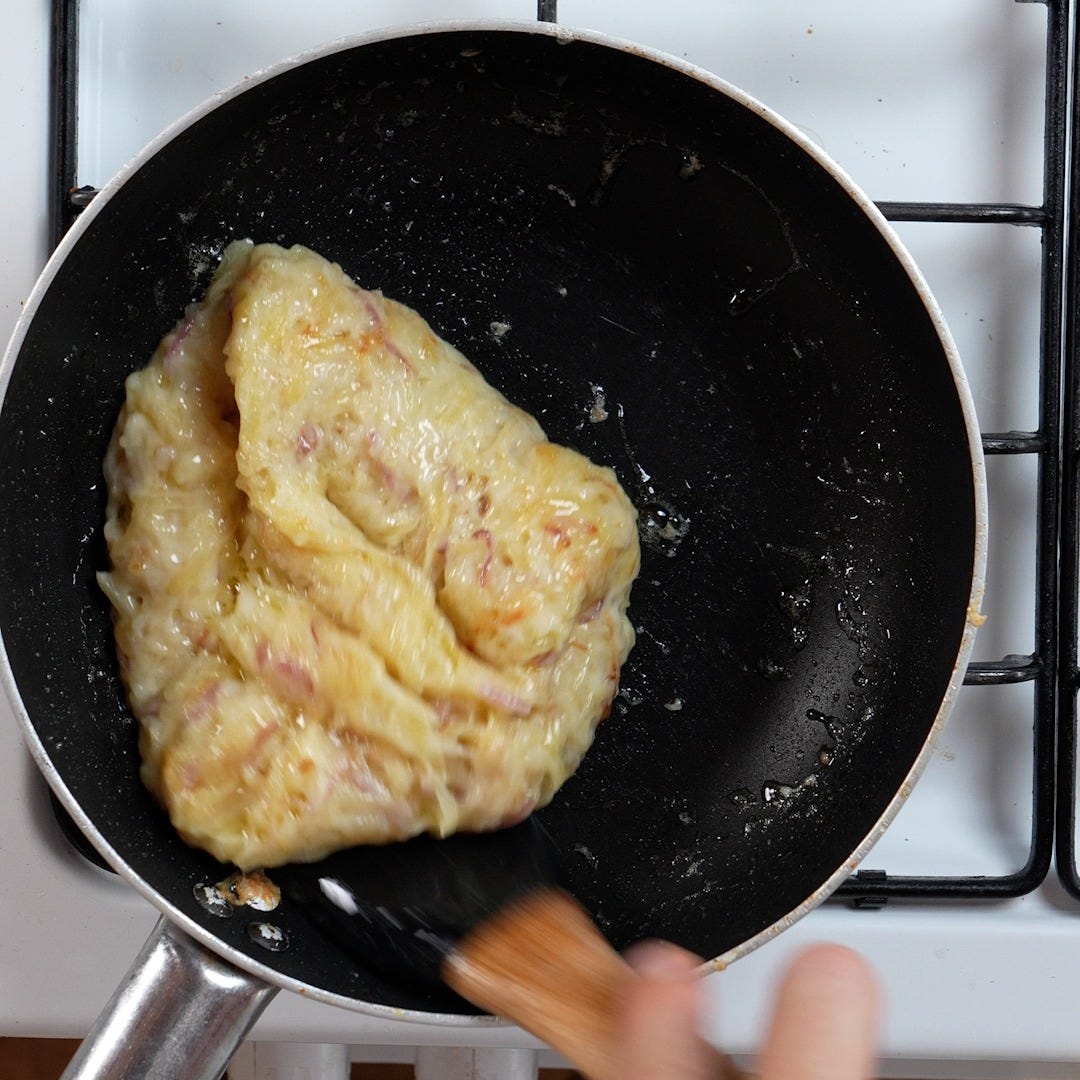
Add both kinds of shredded Montasio, stirring gently so the cheese melts and binds the potatoes and onions. Keep the heat moderate so the cheese softens evenly without burning. When the mixture feels cohesive and starts to pull away from the sides, press it down firmly with a spatula into a thick, even disk.

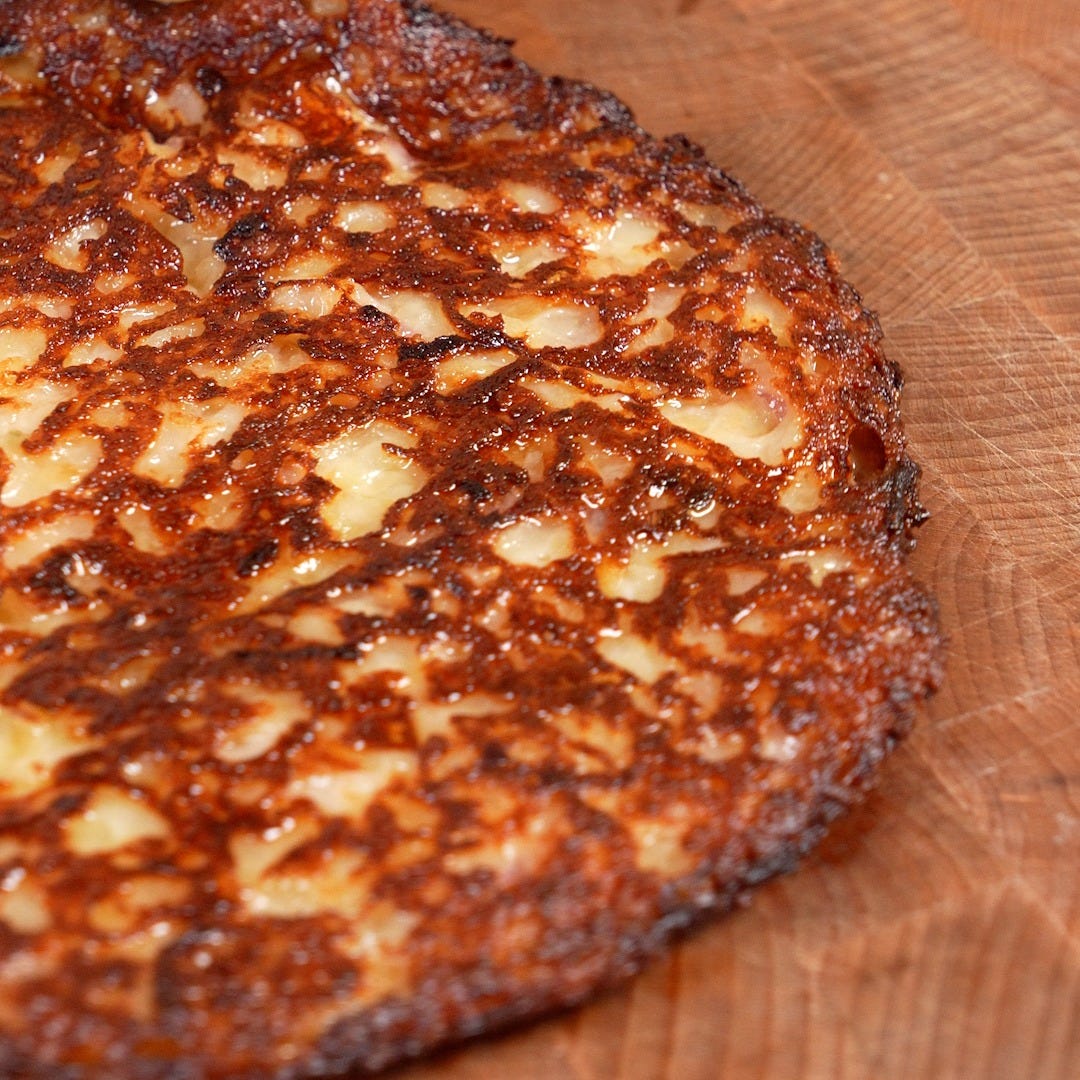
Lower the heat to medium-low and let it cook for 8–10 minutes swriling around every now and then. The cheese at the bottom will begin to caramelize and form a golden, crisp layer. That crust is what makes frico.

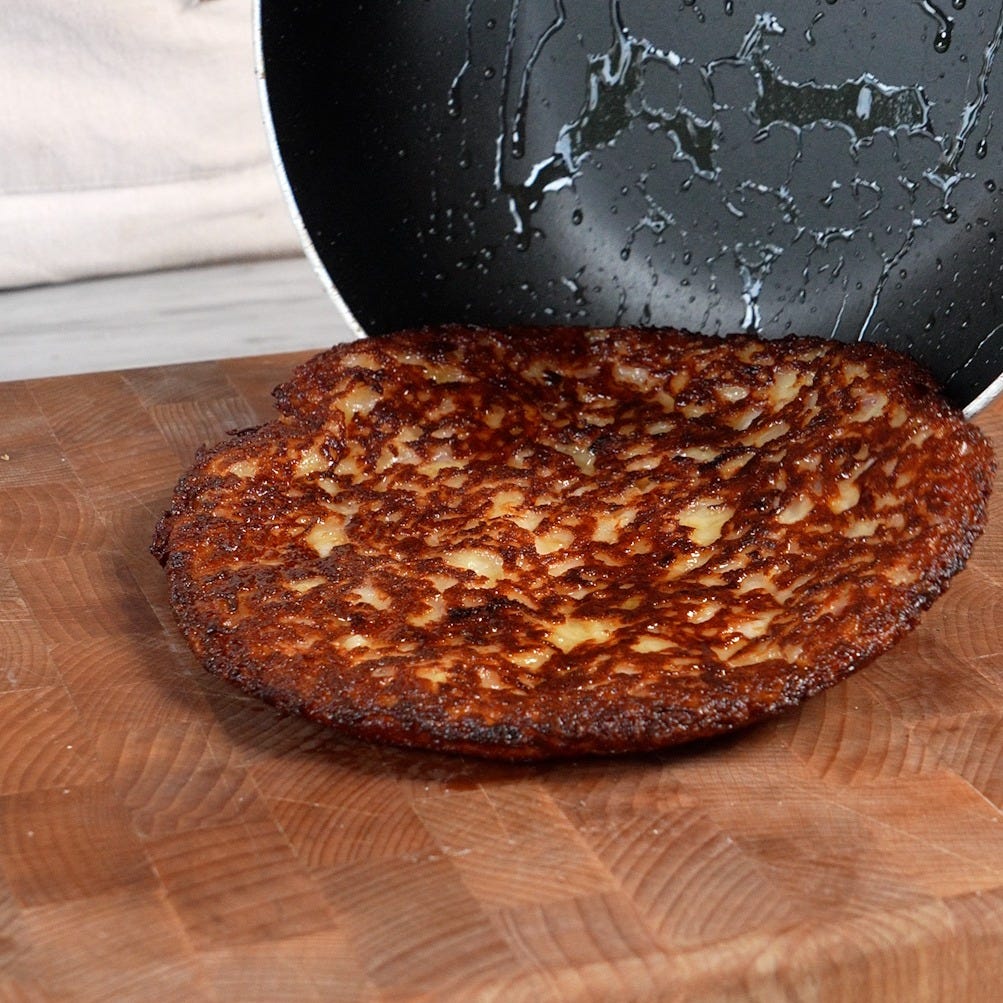
To flip, slide a plate over the pan, invert the frico, and gently slide it back in. Cook the second side until browned and firm, another 8–10 minutes. The outside should be deep golden and the inside soft and stretchy.

Cut into wedges directly from the pan and serve immediately. Traditionally, frico can be eaten with polenta, sautéed wild greens, or speck on the side, but it practically needs nothing more than company and a glass of wine.

TIPS

What surprised me most about frico is how much control comes from restraint. The ingredients couldn’t be simpler, but the dish only works if you let the pan do most of the talking. Parboiling the potatoes for a few minutes in salted water makes all the difference, this way they loose moisture, cook evenly and give the cheese something to hold onto.

The choice of cheese matters because young Montasio melts into the potatoes, while the semi-aged version keeps it structured and flavorful. I like to mix the two, though Asiago or Fontina step in fine if that’s what you have. If you use lard instead of olive oil you need to aspect a faint smokiness that feels older, more traditional.

The hardest part is waiting before the flip. I slide a tray on top, invert it quickly, and let it fall back into the pan with a quiet sigh. Ten more minutes on the second side, and you’ll see the color deepen and the edges pull away on their own.

I served it straight from the pan, wedges cut while it’s still hissing. It’s the kind of dish that doesn’t need sides, though a little polenta or pickled onion fits naturally beside it. I havent tried reheating any leftover because it disappeared in seconds.

For wine, i would pour a Friulano if I’m leaning light and nutty, or a Refosco when I want something with grip and warmth. Either one brings you back to the same feeling: fire, heavy pan and the quiet pride of getting something so simple just right.