Everyone asked for this one and I actually thought it would be simple. They said is just cheese, potatoes, onions, what could go wrong? Then I tried it, and frico reminded me that simple isn’t the same as easy. It taught me that even humble food demands attention.
Frico belongs to Friuli like fire belongs to a hearth. It started in the mountain villages, born from thrift and cold evenings, where families cooked close to the flame. At first it was just scraps of Montasio (the cheese made by monks in alpine dairies) melted in a pan until crisp. Later came onions and potatoes, softening the edges, turning a bite of cheese into a full meal. What began as a way to stretch food became something almost ceremonial, eaten hot from the pan, passed around without plates.

Learning to make it felt like learning someone else’s language, for real. There are two dialects: morbido, soft and melting inside, and croccante, crisp and thin like a sheet of gold. I worked through both until I understood the rule that matters the most that is control. Parboil the potatoes just enough, stir slowly, and trust the heat. When the cheese begins to pull away from the pan, you know it’s ready to rest, to brown and to swirl around. One flip and the smell of Montasio fills the kitchen, there you know you are getting it right.

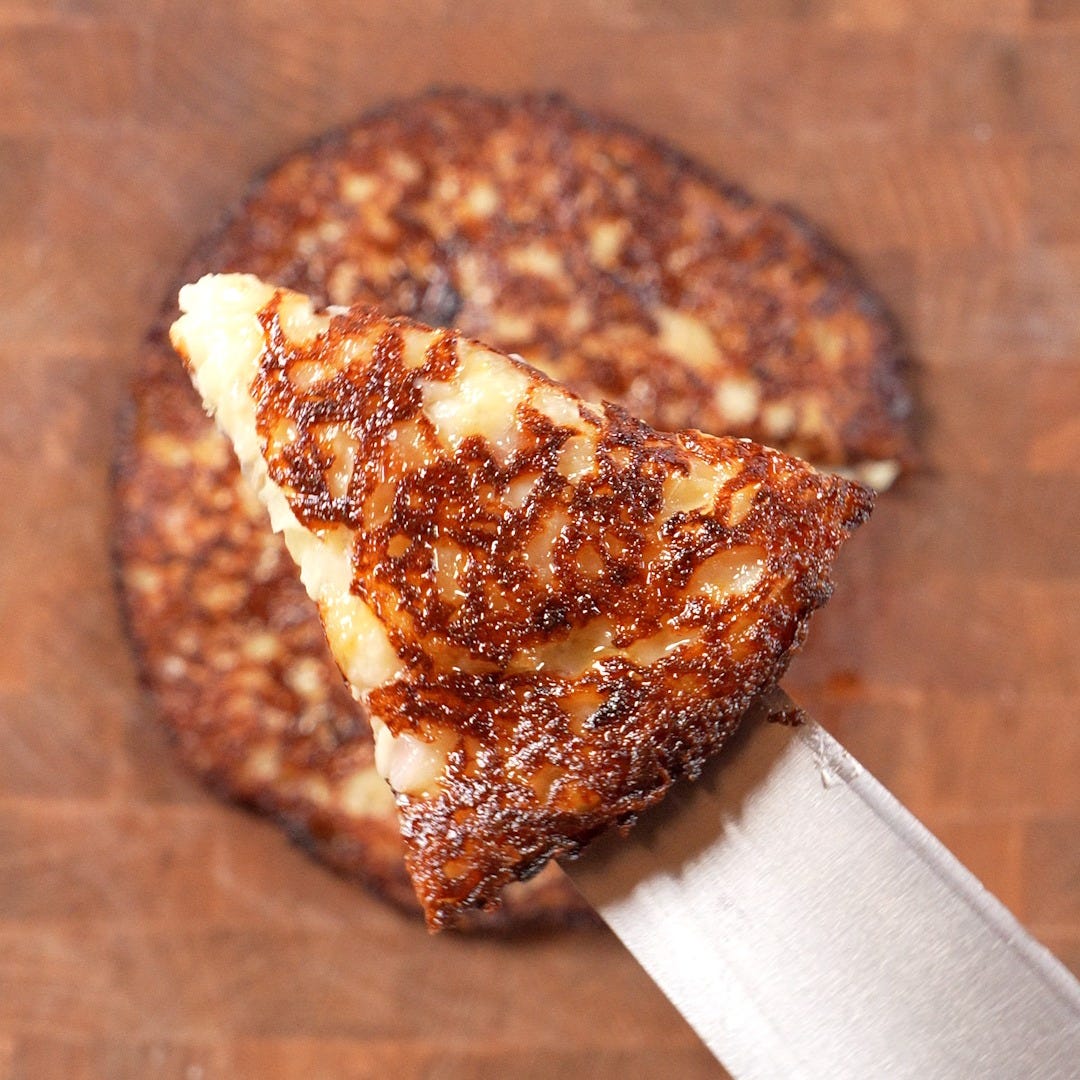
The first slice always silences the table: molten center and golden crust together with the sound of the knife scraping the cuttingboard. Frico never traveled far from home maybe because it couldn’t. Its secret lives in the land and in the patience it asks for. Cooking it now feels like tending a small fire: slow, free and deeply human. In the end, what stays with you isn’t just the taste, but the quiet pride of turning a few ingredients into something that feels whole.
Forgotten Italian Classics exists because of readers like you. If you’d like to support my work and get every recipe in full, consider joining as a free or paid subscriber. Together, we’ll keep these Italian classics alive, one dish at a time.
Serves: 4
Time: 45 minutes
Difficulty: Medium
Region: Friuli-Venezia Giulia
Season: Autumn–Winter
INGREDIENT
600 g potatoes
1 large onion (about 200 g)
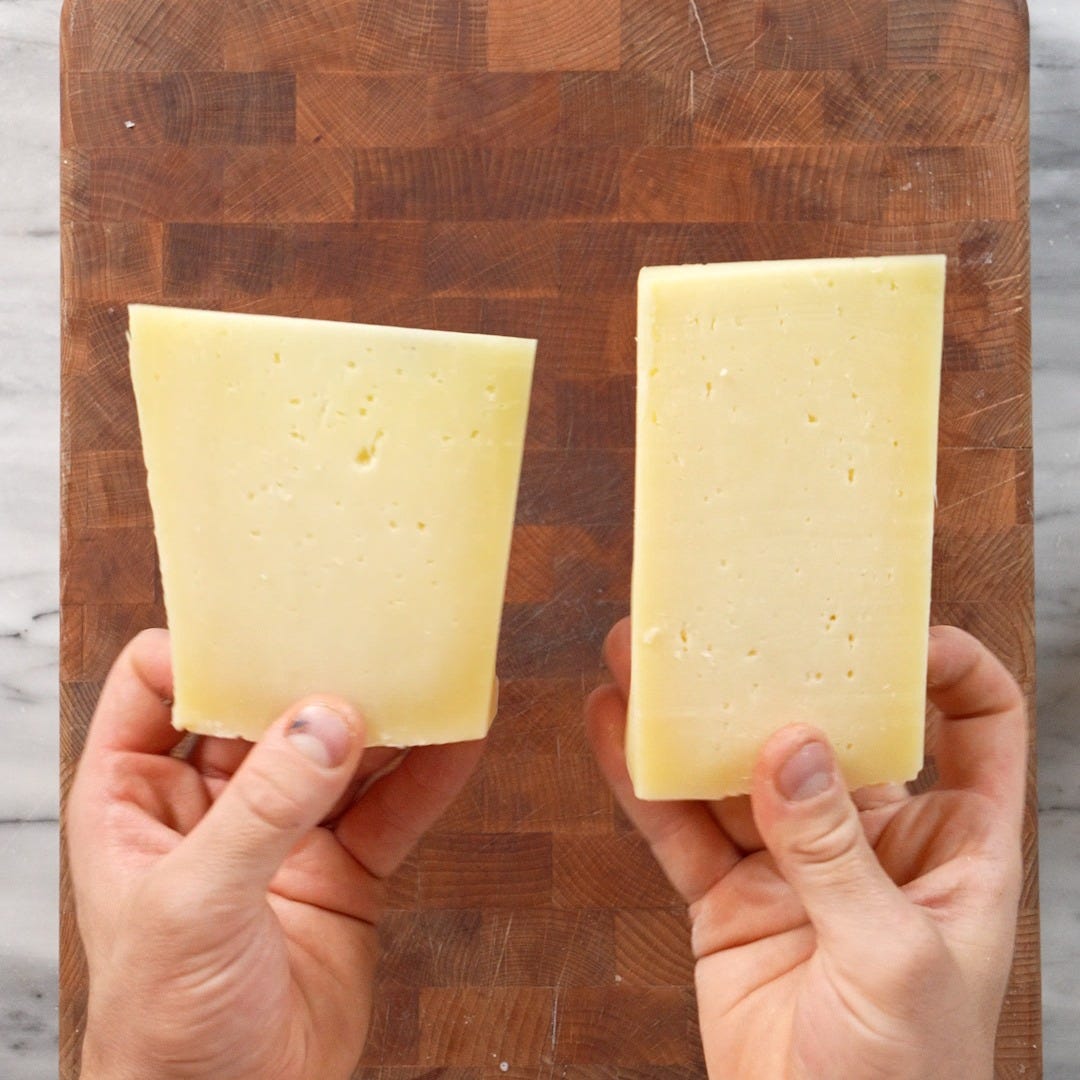
250 g young Montasio cheese, grated or cubed
150 g semi-aged Montasio cheese, grated or cubed
40 g olive oil (or lard for a traditional touch)
Salt and black pepper, to taste
METHOD
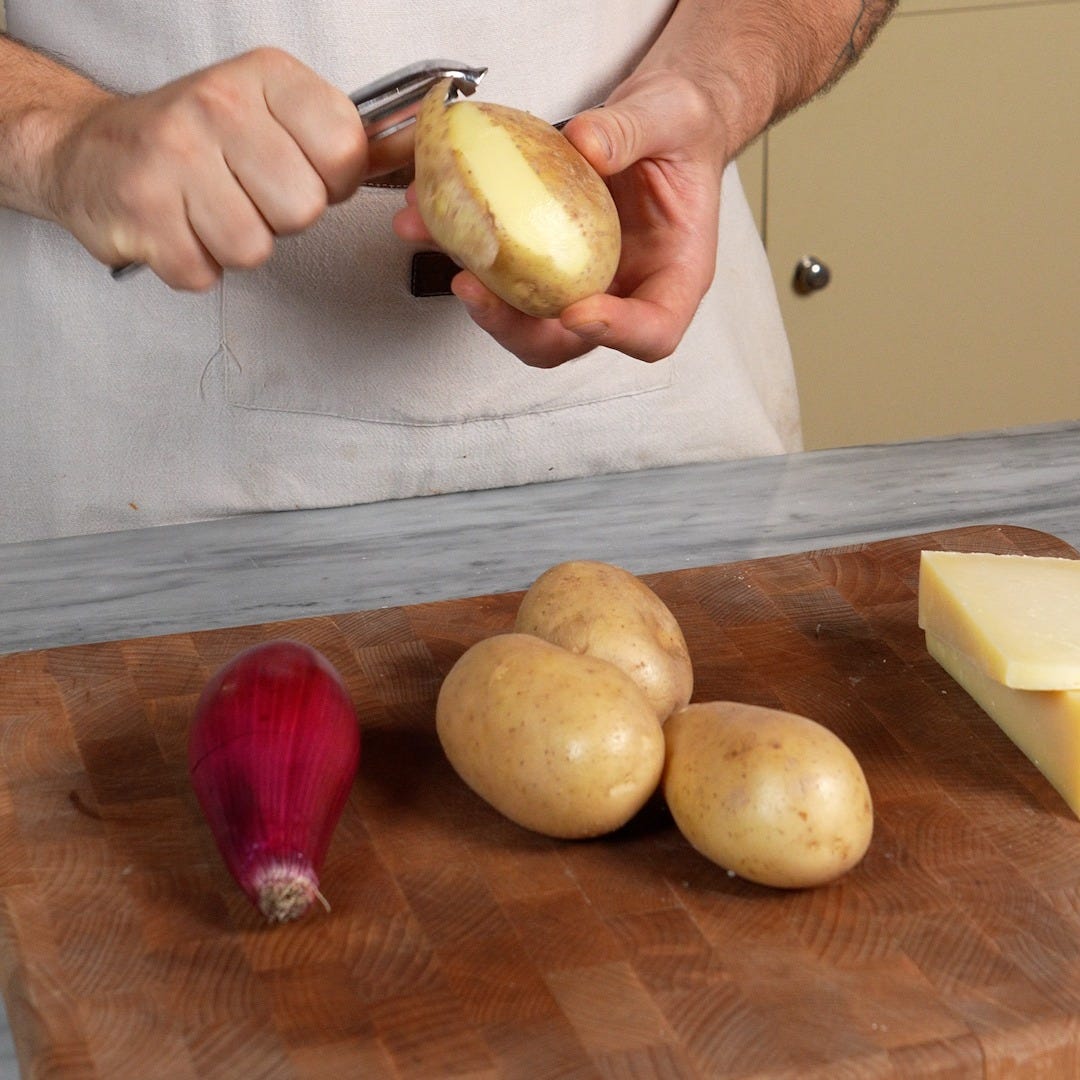
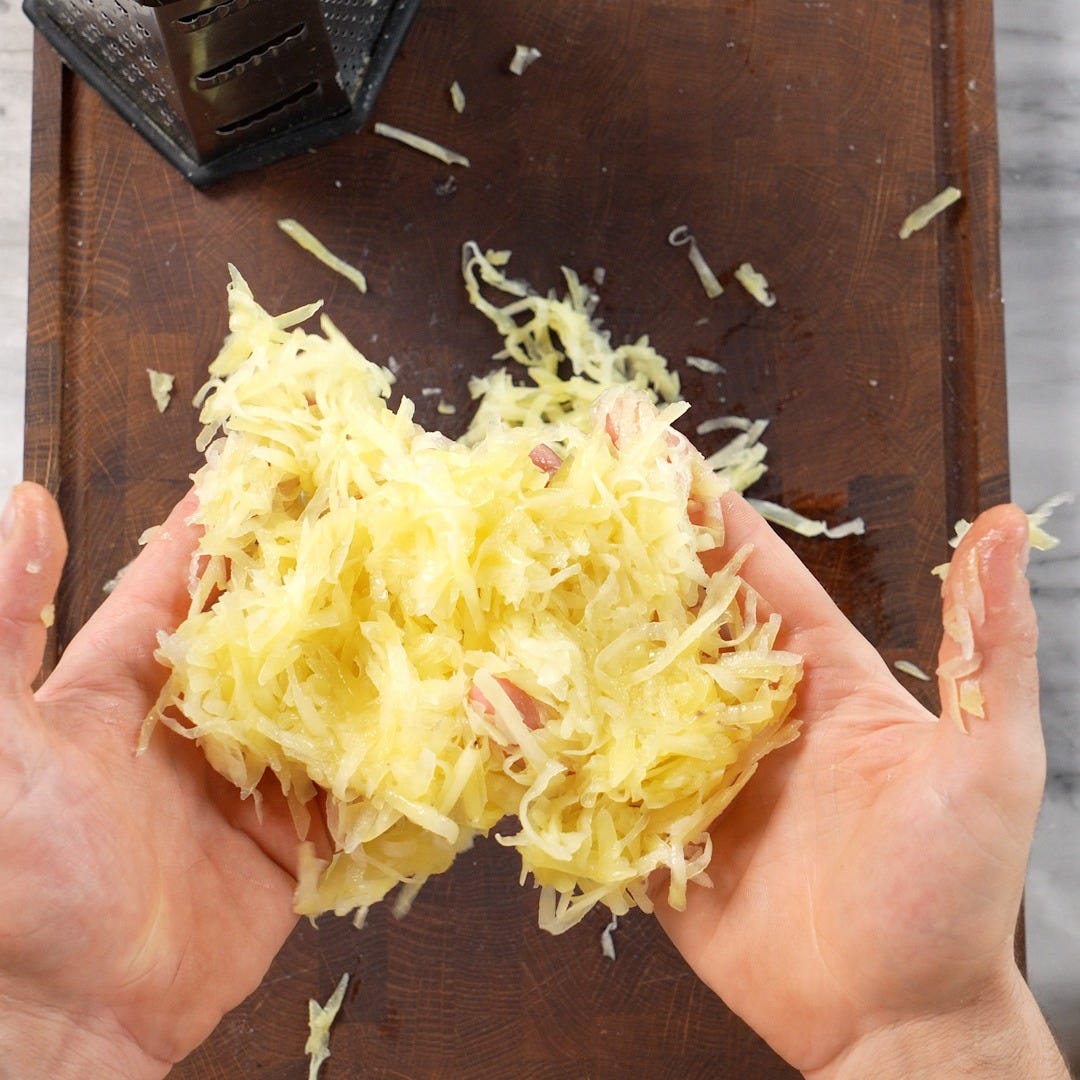
Peel the potatoes and briefly parboil them in 10% salted water for 3–4 minutes, then drain well and let them steam-dry to remove excess moisture. Grate them coarsely and slice the onion thinly.
In a nonstick pan (IMPORTANT), pour the olive oil over medium heat. Add the onion with a pinch of salt. Cook slowly for 5 minutes until soft and golden. Add the potatoes and stirring occasionally for 10 minutes. The mix should start to hold together, that’s the starch doing its work.
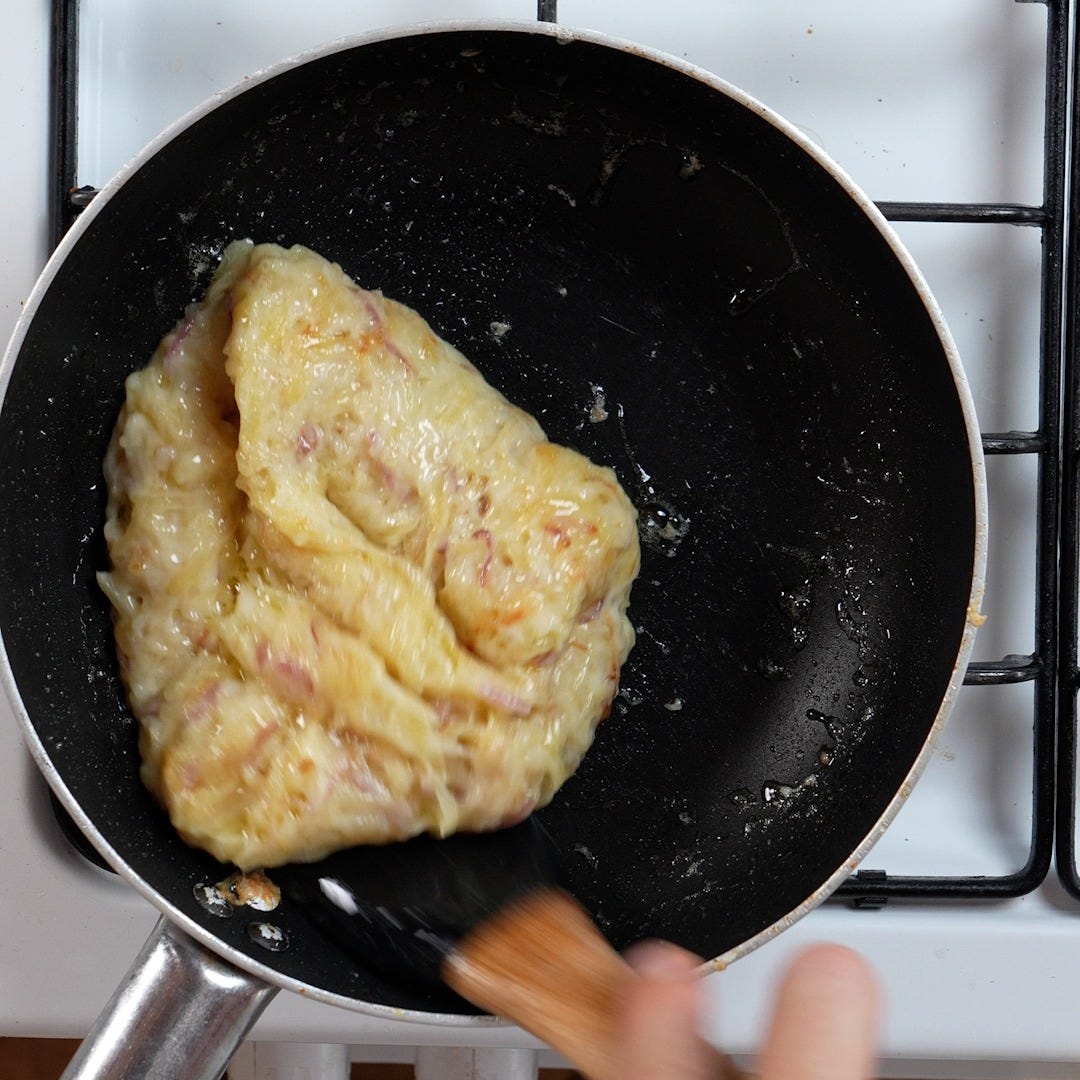
Add both kinds of shredded Montasio, stirring gently so the cheese melts and binds the potatoes and onions. Keep the heat moderate so the cheese softens evenly without burning. When the mixture feels cohesive and starts to pull away from the sides, press it down firmly with a spatula into a thick, even disk.
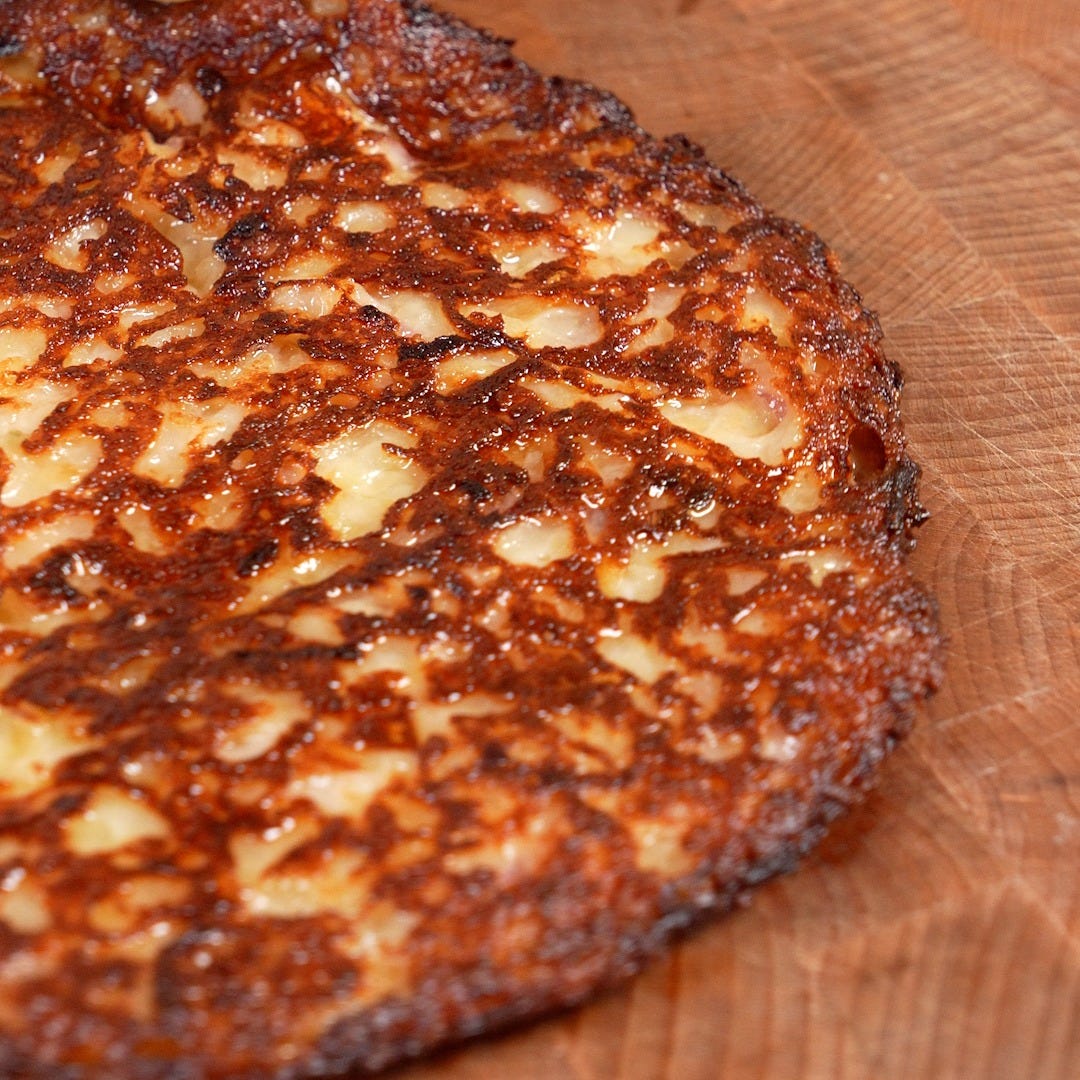
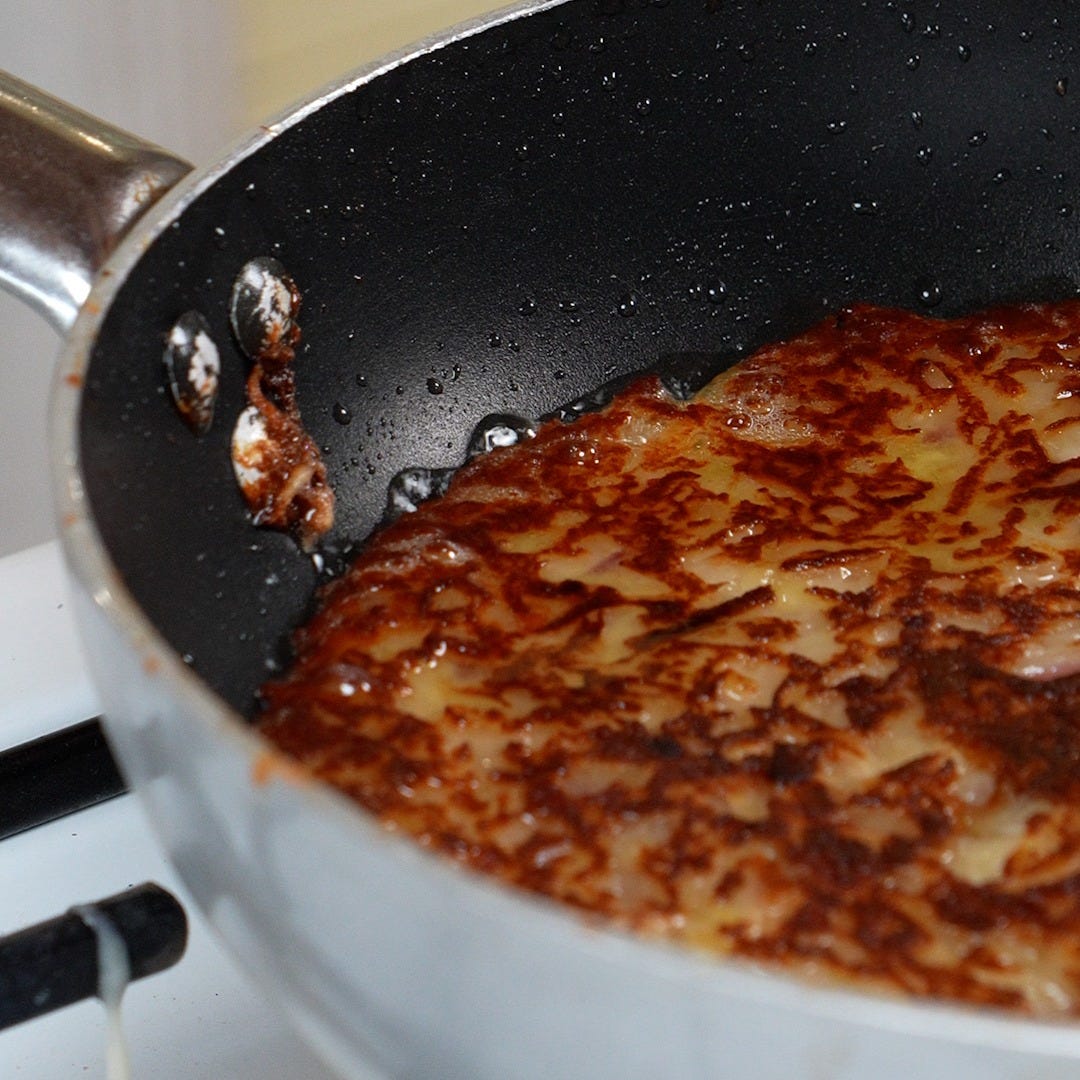
Lower the heat to medium-low and let it cook for 8–10 minutes swriling around every now and then. The cheese at the bottom will begin to caramelize and form a golden, crisp layer. That crust is what makes frico.
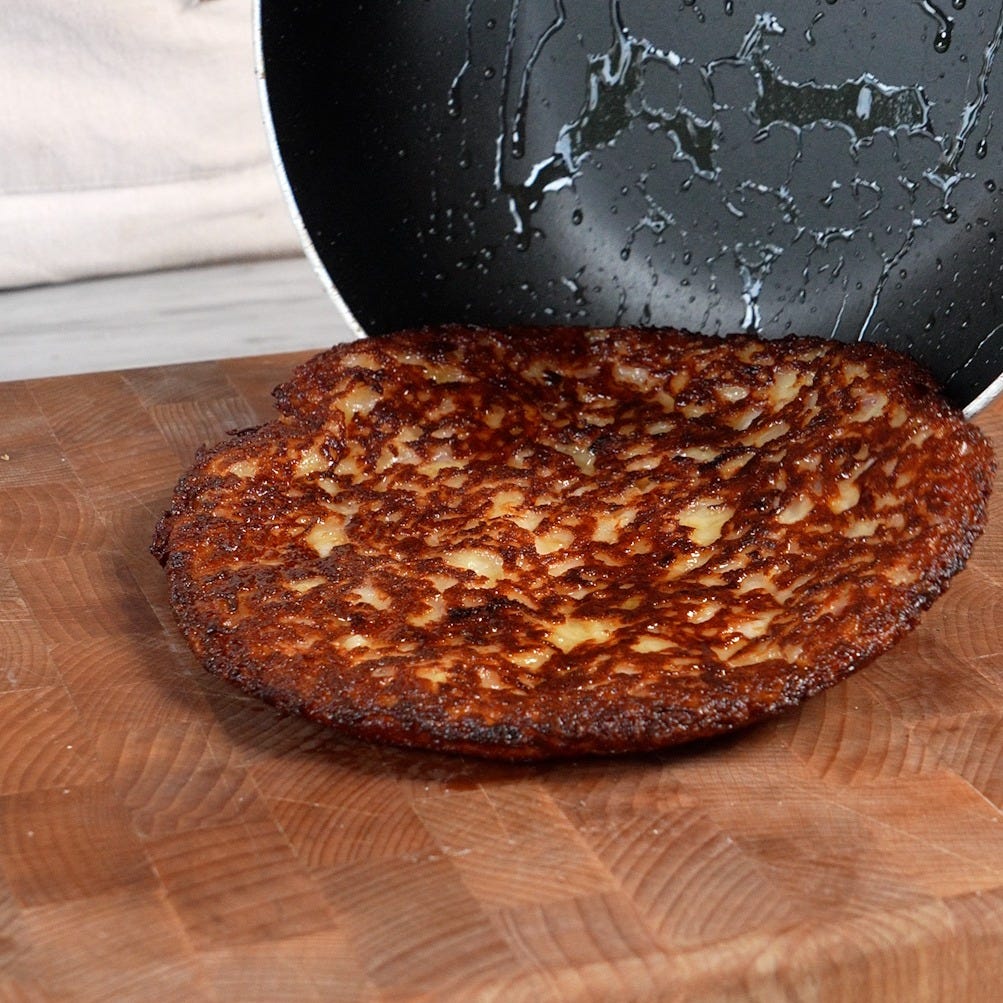
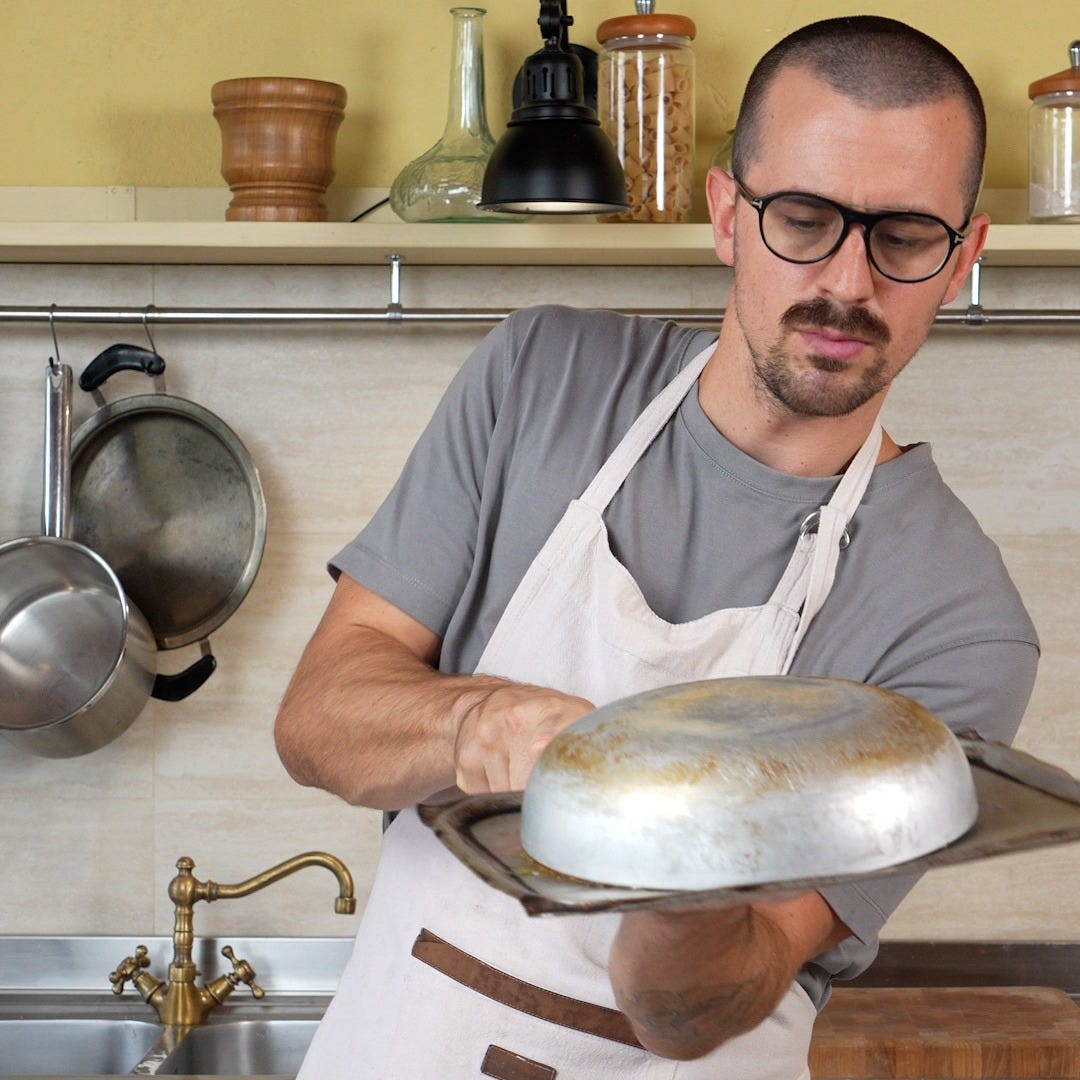
To flip, slide a plate over the pan, invert the frico, and gently slide it back in. Cook the second side until browned and firm, another 8–10 minutes. The outside should be deep golden and the inside soft and stretchy.
Cut into wedges directly from the pan and serve immediately. Traditionally, frico can be eaten with polenta, sautéed wild greens, or speck on the side, but it practically needs nothing more than company and a glass of wine.
TIPS
What surprised me most about frico is how much control comes from restraint. The ingredients couldn’t be simpler, but the dish only works if you let the pan do most of the talking. Parboiling the potatoes for a few minutes in salted water makes all the difference, this way they loose moisture, cook evenly and give the cheese something to hold onto.
The choice of cheese matters because young Montasio melts into the potatoes, while the semi-aged version keeps it structured and flavorful. I like to mix the two, though Asiago or Fontina step in fine if that’s what you have. If you use lard instead of olive oil you need to aspect a faint smokiness that feels older, more traditional.
The hardest part is waiting before the flip. I slide a tray on top, invert it quickly, and let it fall back into the pan with a quiet sigh. Ten more minutes on the second side, and you’ll see the color deepen and the edges pull away on their own.
I served it straight from the pan, wedges cut while it’s still hissing. It’s the kind of dish that doesn’t need sides, though a little polenta or pickled onion fits naturally beside it. I havent tried reheating any leftover because it disappeared in seconds.
For wine, i would pour a Friulano if I’m leaning light and nutty, or a Refosco when I want something with grip and warmth. Either one brings you back to the same feeling: fire, heavy pan and the quiet pride of getting something so simple just right.


:max_bytes(150000):strip_icc():format(webp)/20241213-RosettealForno-AmandaSuarez-Step1-13-ac46d78c4a2440769d631711c9f01d5f.jpg)
:max_bytes(150000):strip_icc():format(webp)/20241213-Rosette-al-Forno-AmandaSuarez-Step2-e74954797cf8464ea268f028b94ff267.jpg)
:max_bytes(150000):strip_icc():format(webp)/20241213-Rosette-al-Forno-AmandaSuarez-Step4-de135b97b9a14b2da800bceb3017905e.jpg)
:max_bytes(150000):strip_icc():format(webp)/20241213-RosettealForno-AmandaSuarez--24-fc12a49d0ea047c299dd69d5cfbd4434.jpg)
:max_bytes(150000):strip_icc():format(webp)/20241213-Rosette-al-Forno-AmandaSuarez-Step5-40fcf081826e4264b558328af47dc92f.jpg)
:max_bytes(150000):strip_icc():format(webp)/20241213-Rosette-al-Forno-AmandaSuarez-Step6-cec7396b48d24ba6977f08a31dd306b3.jpg)
:max_bytes(150000):strip_icc():format(webp)/20241213-Rosette-al-Forno-AmandaSuarez-Step7-3efa42355e364cb7ace6b0cf637ffd85.jpg)
:max_bytes(150000):strip_icc():format(webp)/20241213-Rosette-al-Forno-AmandaSuarez-Step8-22413dcfca59462a9c0157be68ed621f.jpg)
:max_bytes(150000):strip_icc():format(webp)/20241213-RosettealForno-AmandaSuarez-step832-57e0d8d392584941baa15a6358794d59.jpg)
:max_bytes(150000):strip_icc():format(webp)/20241213-RosettealForno-AmandaSuarez-step933-ccd3ff37170c4edfbcb574ae268c623a.jpg)
:max_bytes(150000):strip_icc():format(webp)/20241213-RosettealForno-AmandaSuarez-step1035-1c00e88eb7d2487db6da2c2fedae831f.jpg)
:max_bytes(150000):strip_icc():format(webp)/20241213-RosettealForno-AmandaSuarez-00-0346de045e5d4552bfc1a2fa32bc4fa5.jpg)