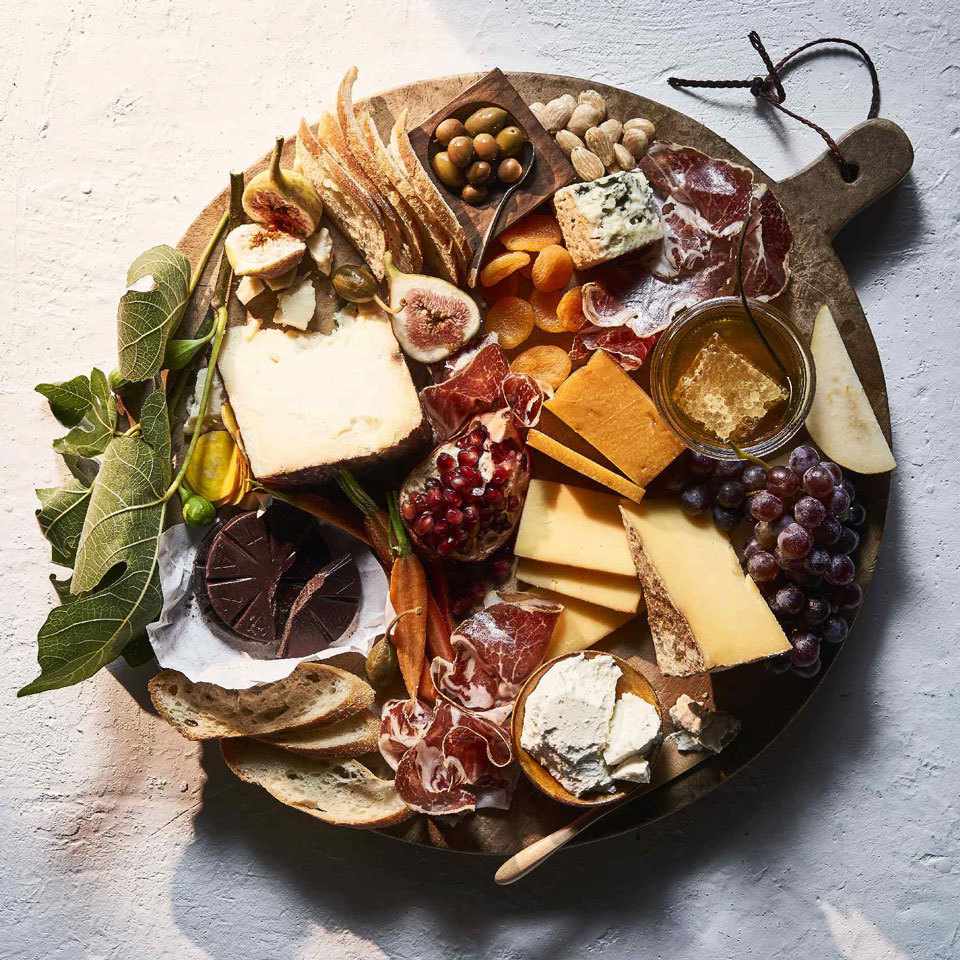
From the classic slab of meats and cheeses to unique, fun twists like "jarcuterie" and charcuterie sticks, you're almost guaranteed to find some version of a charcuterie board at any gathering you go to—and for good reason. Charcuterie boards are not only an easy appetizer to assemble, but they can also be made ahead of time. Plus, charcuterie boards offer a variety of options, so everyone is bound to find something they want to snack on. Learn how to make a healthy charcuterie board with these six easy tips.
How to Make a Healthy Charcuterie Board
1. Choose Whole Grains
When it comes to the bread and crackers on a charcuterie board, choose whole-grain versions. Whole grains have a wealth of health benefits, including being packed with fiber, B vitamins and protein. Many whole-grain crackers often include other ingredients like nuts and seeds, which add texture, flavor and nutrition. For suggestions, check out the best crackers to buy, according to a dietitian. Or, if you're looking for a low-carb alternative, you can skip the bread and crackers and make your own crisps, like these Cauliflower Chips or Parmesan Crisps.
2. Add Nuts
Nuts are a healthy snack at any time, and they add a delicious crunch to any spread. Each type of nut has its own nutrition profile, but as a whole, nuts are a great source of plant-based protein and are high in healthy fats, while being lower in saturated fats. To keep it simple, you can add a bowl of store-bought nuts to your next charcuterie board. Or, take it up another level and make one of these spiced nut recipes, like Everything-Seasoned Almonds or Rosemary-Garlic Pecans, for a boost of flavor.
3. Load Up on Fruits & Veggies
When you're assembling a charcuterie board, be sure to add plenty of fruits and veggies! Not only do they pair well with meats and cheeses, but they're also a healthy way to add color and nutrients to the board. Many charcuterie boards feature dried fruit, like apricots or figs, for a touch of sweetness. Just be sure to look for dried fruit that's unsweetened, and check the label for added sugars. You could also opt for fresh fruit as well.
When it comes to veggies, the options are endless. From carrot sticks to cucumber slices, add any raw veggies your heart desires! To make everything consistent, be sure they're cut into bite-size pieces so you and your guests can easily munch.
4. Choose the Right Meats & Cheeses
The selection of meats and cheeses is arguably the most important part of any charcuterie board. When it comes to choosing the meat, we recommend limiting cold cuts like turkey or ham, which can be high in sodium and saturated fat (not the best if you're following a heart-healthy diet). Instead, look for meat that is leaner or labeled reduced- or low-sodium. Meanwhile, options like prosciutto and salami might not be the healthiest choice, but they are popular on a charcuterie board, and we're big fans of eating anything in moderation (just don't eat a charcuterie board every day).